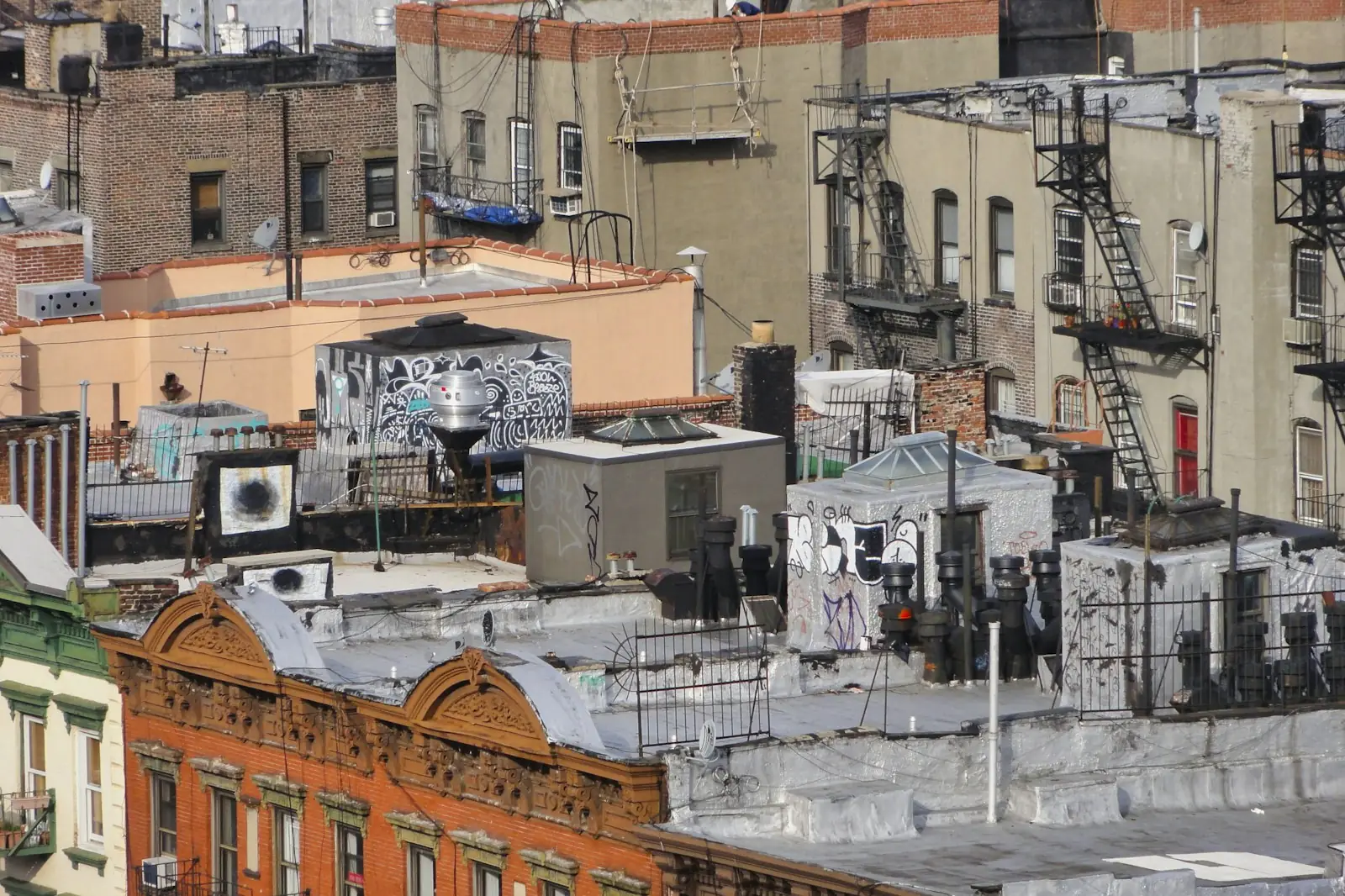
If you own or manage a building in Mott Haven — a six-unit walk-up off St. Ann’s Avenue, a mixed-use building on Willis Avenue, a newer rental on Bruckner — you already know the call. It’s 2 a.m., the super says water is coming down the line, and three tenants are texting photos. What happens in the next few hours decides whether this is a few thousand dollars or a five-figure claim with an HPD complaint attached.
What we do on a multi-unit loss
- Triage on the phoneWhich line, which floors, is it stopped, is it near electrical, is it sewage. We tell the super what to shut and where.
- Stop the spreadWe confirm the riser or main is off and go floor by floor, top to bottom.
- Map every unitThermal imaging and moisture readings in each affected apartment and the common areas, with a moisture map per unit.
- Extract and protectStanding water out, ceilings relieved where water is pooled, tenants’ belongings moved and protected.
- Dry the buildingEquipment set per unit and per material — plaster, hardwood, masonry — with readings at every visit.
- Close it out on paperFinal dry readings, photo logs and an itemized scope you can send to your carrier.
Documentation your adjuster will accept
A claim lives or dies on paperwork. On every job, you get:
- Date- and time-stamped photos from first arrival through final readings
- Moisture maps and daily drying logs for every affected unit and common area
- The water category and the source as we found them
- An itemized scope and estimate in Xactimate format
- A list of removed materials and tenant belongings, photographed before disposal
- Direct communication with your adjuster or public adjuster when you want it
Certificate of insurance available on request — we’re licensed and insured.
Tenants, HPD and the clock
Water damage in a rental is a habitability issue. Tenants who don’t hear anything call 311, and HPD complaints follow. A few things that keep that under control:
- HPD violation classes: immediately hazardous (Class C) conditions generally have to be corrected within 24 hours; hazardous (Class B) within 30 days; non-hazardous (Class A) within 90 days. Water through light fixtures, collapsing ceilings and sewage in an apartment get attention fast.
- Mold: NYC Local Law 55 requires owners of buildings with three or more apartments to investigate and fix indoor mold and the moisture causing it. Drying fast and documenting it is the cheapest way to stay ahead of that.
- Heat: if the boiler room flooded in heat season, getting it dry so the boiler can be inspected comes first.
- Lead and asbestos: in pre-war buildings, opening walls and ceilings can disturb lead paint or asbestos-containing materials. NYC presumes lead paint in pre-1960 buildings where a child under 6 lives, and bigger repairs may need an asbestos survey first. We flag it before we cut.
Tenant updates: we give you a plain-language timeline — what we’re doing, how long equipment stays, when to expect quiet — that you can forward to residents in English and Spanish. Informed tenants make fewer 311 calls.
Sewer backups: City main or your service line?
When the cellar takes sewage, the next question is whose problem the cause is. DEP is responsible for the City’s sewer in the street; the owner is responsible for the building’s sewer service line. If tenants or the super report it to 311, DEP says it inspects within six hours. If DEP finds the issue on your private line, you’ll get a Notice to Repair. If the City’s sewer caused the damage, there’s a 90-day window to file a claim with the NYC Comptroller. We document where the water came in and when, so you have it either way. How South Bronx sewer backups work →
The losses we see most in Mott Haven buildings
Riser and stack failures
Galvanized supply risers and cast-iron stacks in pre-war walk-ups — water running down a line of apartments. Burst pipes →
Cellar sewer backups
Combined-sewer surcharge during heavy rain, worst on low blocks near the Harlem River and Bronx Kill. Sewage cleanup →
Freeze-ups and sprinkler heads
Exterior-wall lines, hallways and sprinkler heads near windows — and the flood that comes on the thaw. Frozen pipes →
Top-floor roof leaks
Flat roofs and parapets after storms and snowmelt — we dry the units while your roofer fixes the roof. Ceiling leaks →
Pricing for buildings
Every unit is scoped and documented on its own, so you can see exactly what each apartment cost. Typical ranges per affected area: clean-water extraction $650 – $1,800, gray water $1,200 – $4,000, sewage backups $3,500 – $15,000+. You get a written estimate before work starts. Full cost guide →
FAQs for owners and managers
Can you work multiple apartments at once?
Yes. On a riser or stack failure we work the line floor by floor, extracting and drying every affected unit and the common areas, and document each one separately.
Do you provide estimates in Xactimate format?
Yes. You get an itemized scope and estimate in Xactimate format, plus photo logs and daily moisture readings for your carrier.
Can you send a certificate of insurance?
Yes — we’re licensed and insured, and we can send a certificate of insurance on request.
Who is responsible for a sewer backup — the City or the owner?
DEP handles the City’s sewer in the street; the owner is responsible for the building’s sewer service line. If DEP finds the problem on the private line, the owner gets a Notice to Repair. If the City’s sewer caused it, there’s a 90-day window to file a claim with the NYC Comptroller.
How fast do HPD violations for water damage have to be fixed?
Immediately hazardous (Class C) conditions generally have to be corrected within 24 hours, hazardous (Class B) within 30 days and non-hazardous (Class A) within 90 days. Fast extraction and drying keep a leak from turning into a mold or ceiling-collapse violation.
Can you talk to my tenants in Spanish?
Yes. Hablamos español — we can explain what’s happening to residents and give you tenant updates in English and Spanish.