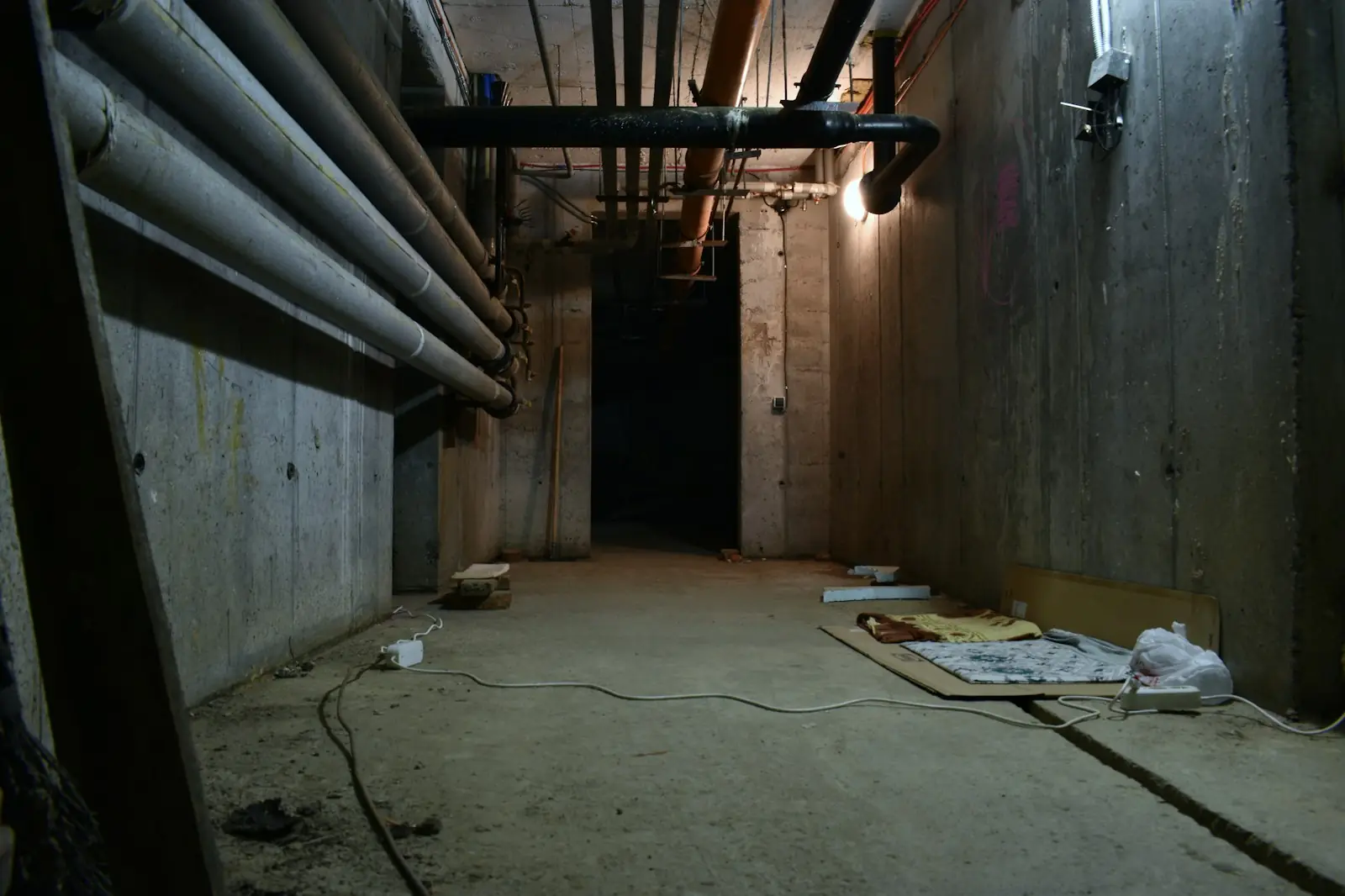
In Mott Haven, the basement is where water ends up. It’s the lowest point in the building, it’s tied straight into the sewer, and in a lot of the older walk-ups and rowhouses it sits below the street. When something goes wrong — a downpour, a high tide, a split pipe two floors up — the cellar gets it.
We remove water from cellars, basement apartments, boiler rooms, laundry rooms and basement storefront stockrooms across Mott Haven and Port Morris, day or night.
Why Mott Haven basements flood
Combined sewer surcharge
Rain and household wastewater share the same mains. In a heavy storm, the main fills and pushes back up through cellar floor drains, basement toilets and laundry sinks. That water is sewage. Sewage backups →
Low ground and high tides
Blocks near the Harlem River, the Bronx Kill and the Bruckner corridor sit low. A high tide plus storm surge can push water back through manholes, catch basins and building connections.
Old foundation walls
Rowhouse and tenement cellars built of brick and stone let groundwater seep in after long rains, especially where mortar has washed out or the street sits higher than the cellar floor.
Pipes, boilers and pumps
Split supply lines, leaking boilers and water heaters, and ejector or sump pumps that quit when the power goes out. The water may be clean at first — it doesn’t stay that way on a cellar floor.
Is the water in my basement sewage?
If it came up through a floor drain, toilet, tub or laundry sink, or it came in from the street, treat it as sewage (Category 3) until it’s tested. If it’s clearly from a burst supply pipe and you caught it fast, it may be clean — but water that sits on an old cellar floor picks up whatever’s there. We check before we decide how to handle it.
Basement apartments: the extra risks
A lot of families in the neighborhood live in basement and cellar-level apartments. They take the worst of it, and a few things make them more dangerous when they flood:
- Drains below the sewer connection. DEP warns that if a bathroom in a converted basement sits lower than the building’s sewer connection, raw sewage can back up straight into the apartment.
- Electrical near the floor. Outlets, power strips, space heaters and appliances sit low. If water is near them, don’t touch anything — shut the breaker only if you can reach it from a dry spot.
- Gas appliances. A flooded water heater or stove can be a gas hazard. If you smell gas, get out and call 911 or Con Edison at 1-800-75-CONED from outside.
- Getting out. During a fast storm, water in a basement apartment can rise quickly. Don’t stay to save things — leave and call from outside.
If you rent a basement apartment, your landlord is responsible for making it livable again. Your belongings are usually on you or your renters insurance. What NYC renters are owed after a flood →
How we get water out of a basement
- Check it’s safe to go inPower, gas and the boiler first. If the water is touching electrical, we coordinate with the building and an electrician before anyone wades in.
- Pump the deep waterSubmersible and trash pumps move standing water fast, out to the street or the right drain — not into the yard next door.
- Extract what’s leftExtractors pull water out of carpet, low spots and porous floors. Getting liquid water out is far faster than drying it with air.
- Clear the sludgeStorm and sewer water leaves sediment on cellar floors. It comes out before anything gets cleaned.
- Remove, clean, treatFor sewage, soaked drywall, insulation and carpet come out; every surface gets cleaned and an antimicrobial.
- Dry the masonryBrick, stone and concrete soak up water and give it back slowly. Dehumidifiers do most of the work here, with readings at every visit.
- Document itPhotos, moisture readings and a written record — what you’ll need for 311, a Comptroller claim, your landlord or your insurer.
Boiler rooms and mechanical spaces
A flooded boiler room is a building-wide problem — no heat, no hot water, and in winter, a risk of frozen pipes upstairs. Don’t restart a boiler, water heater or electrical equipment that’s been under water until a licensed technician or electrician checks it. We get the water out and the space dry so the people who fix boilers can get to work faster. If you manage the building, see our page for owners and supers.
Drying an old brick or stone cellar
This is where a lot of basement jobs go wrong. Masonry wicks water up into the walls, and a cellar has little airflow. If the floor looks dry but the walls are still wet, you get that musty smell that never leaves — and mold on anything stored down there.
- We measure the walls, not just the floor.
- We run dehumidifiers sized to the space and keep the cellar closed up so we’re drying it, not the street.
- We don’t call it dry until the readings say so. Old masonry can take a week or more.
What basement water removal costs
| Situation | Typical range |
|---|---|
| Category 1 Clean water from a burst line, caught fast | $650 – $1,800 for a small area; more for a full cellar |
| Category 2 Washer, water heater or boiler water that’s sat a while | $1,200 – $4,000 |
| Category 3 Sewer backup or floodwater from the street | $3,500 – $15,000+ |
You get a written estimate after we see the space, before the work starts. Full cost guide →
Keeping the next storm out
- Drain and toilet plugs — DEP points to these as a cheap, maintenance-free way to block backups through basement fixtures.
- Backwater valves can help but need yearly maintenance and coordination in multi-family buildings, according to DEP.
- Report clogged catch basins on your block to 311 before storm season.
- Keep stored items on shelves or in sealed bins, never cardboard on the floor.
- Know where the main water shutoff is — usually in the cellar by the water meter — and make sure it actually turns.
Basement flooding FAQs
Why does my basement flood every time it rains hard?
Most likely because the combined sewer under the street fills up and pushes water back through the lowest drains in your building. Low-lying blocks near the Harlem River and the Bronx Kill are more exposed. A plumber can tell you whether drain plugs or a backwater valve make sense for your cellar.
Can I just pump the water out myself?
If it’s a little clean water and there’s no electrical risk, you can start. But if it came up a drain or in from the street, treat it as sewage and don’t handle it without protection. And pumping is only the start — the walls and floor still have to be dried and checked.
How long does it take to dry a basement?
Extraction is usually done the same day. Drying a brick, stone or concrete cellar often takes several days to a week or more. We check readings every visit and finish when the materials are dry.
Is basement flooding covered by insurance?
It depends on the cause. A sudden burst pipe is commonly covered. Sewer backups often need a sewer or water backup endorsement, and flooding from outside usually needs flood insurance. Renters insurance covers your belongings, not the building.
My boiler room flooded. Can I turn the boiler back on?
Not until a licensed technician checks it. Equipment that’s been under water can be a fire, gas or electrical hazard. We get the water out and dry the room so it can be inspected.
Do you handle flooded basement apartments for renters?
Yes. We document the damage and can work directly with your landlord or super, who is responsible for making the apartment livable again.