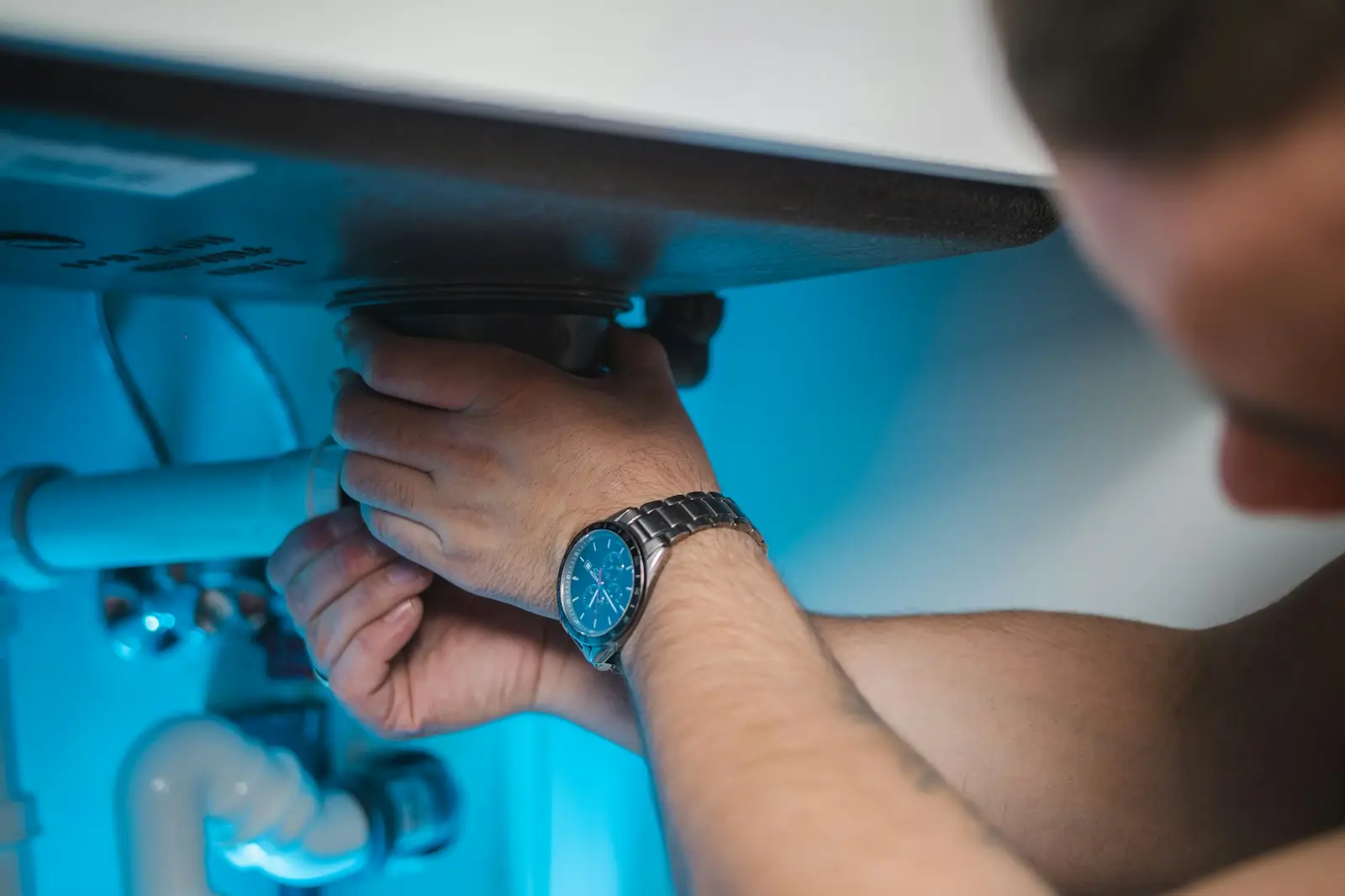
1. The call
A person answers, 24 hours a day — in English or Spanish. We’ll ask a few quick questions, because the answers decide what goes on the truck:
- Where is the water, and where is it coming from?
- Has it stopped? If not, we’ll talk you or your super through the shutoff.
- How long has it been there?
- Did it come up through a drain, toilet or tub — or does it smell? (That means sewage.)
- Is it near electrical? Are other apartments getting it?
- Do you rent or own, and who’s the super or manager?
Then we give you an honest arrival time and tell you what to do until we get there.
2. Arrival and safety check
First we make sure it’s safe to work: power to the wet area, any gas smell, ceilings that are sagging or holding water, and whether anyone needs to step out. In a pre-war building we also note where lead paint or asbestos-containing materials might be disturbed before we cut anything.
3. Finding all the water
The puddle is only what you can see. We use:
- Thermal imaging cameras to spot the cold, wet areas behind walls, under floors and above ceilings
- Pin moisture meters that read how wet a material is inside
- Pinless meters that scan surfaces without leaving marks
- Hygrometers to measure humidity in the room
We sketch a moisture map — every wet area, every reading — and in stacked buildings we check above and below the source.
4. Water category and the plan
We decide whether it’s clean, gray or sewage-contaminated water (Category 1, 2 or 3 under the IICRC S500 standard) and walk you through the plan: what gets extracted, what can be dried in place, what has to come out, and roughly how long drying will take. You get a written estimate before the work starts. Categories explained →
5. Extraction
Getting liquid water out is far faster than drying it with air, so this is where we spend the effort up front:
- Submersible and trash pumps for deep water in cellars and basements
- Extractors for carpet, low spots and porous floors
- Carpet extraction tools that can pull water from carpet and pad in place, without lifting them
6. Removal, cleaning and treatment
With sewage, porous materials that soaked it up — carpet and pad, drywall, insulation — generally come out, cut above the wet line. Everything the water touched gets cleaned, then treated with an antimicrobial. We photograph and list anything that leaves the building, and nothing of yours gets thrown out without your say.
7. Drying the structure
Air movers move moist air off wet surfaces; dehumidifiers pull that moisture out of the air. We size and place them for the room and the materials. Plaster, brick, stone and old hardwood dry slowly — rush them and plaster cracks and floors split — so we dry them at the pace they can handle.
8. Readings at every visit
We come back to take readings, adjust equipment and pull anything that’s no longer needed, so you’re not paying for days you don’t need. Every reading is written down.
Our dry-standard promise
Equipment stays until the readings show your materials are dry — and you get those readings in writing. No guessing, no “it should be fine.”
9. Paperwork you can use
At the end you get a record you can hand to your landlord, your insurer, an adjuster, 311 or HPD:
- Date- and time-stamped photos from first visit to last
- The water category and the source as we found them
- Moisture maps and daily drying logs
- A list of removed materials and damaged belongings
- An itemized estimate — in Xactimate format for insurance work
Pricing and insurance
You get a written estimate before we start. Typical ranges in Mott Haven: about $650 – $1,800 for clean water in a room or small apartment area, $1,200 – $4,000 for gray water, and $3,500 – $15,000+ for a sewage backup in a basement or cellar. If you rent, we can work directly with your landlord or super; if you’re insured, we work with your adjuster. Full cost guide →
Who we bring in when it’s needed
We don’t repair pipes, boilers, sprinklers or roofs, and mold jobs over 10 square feet in New York State need state-licensed mold professionals. When your job needs a plumber, electrician, roofer or mold assessor, we tell you up front and coordinate so the drying isn’t held up.