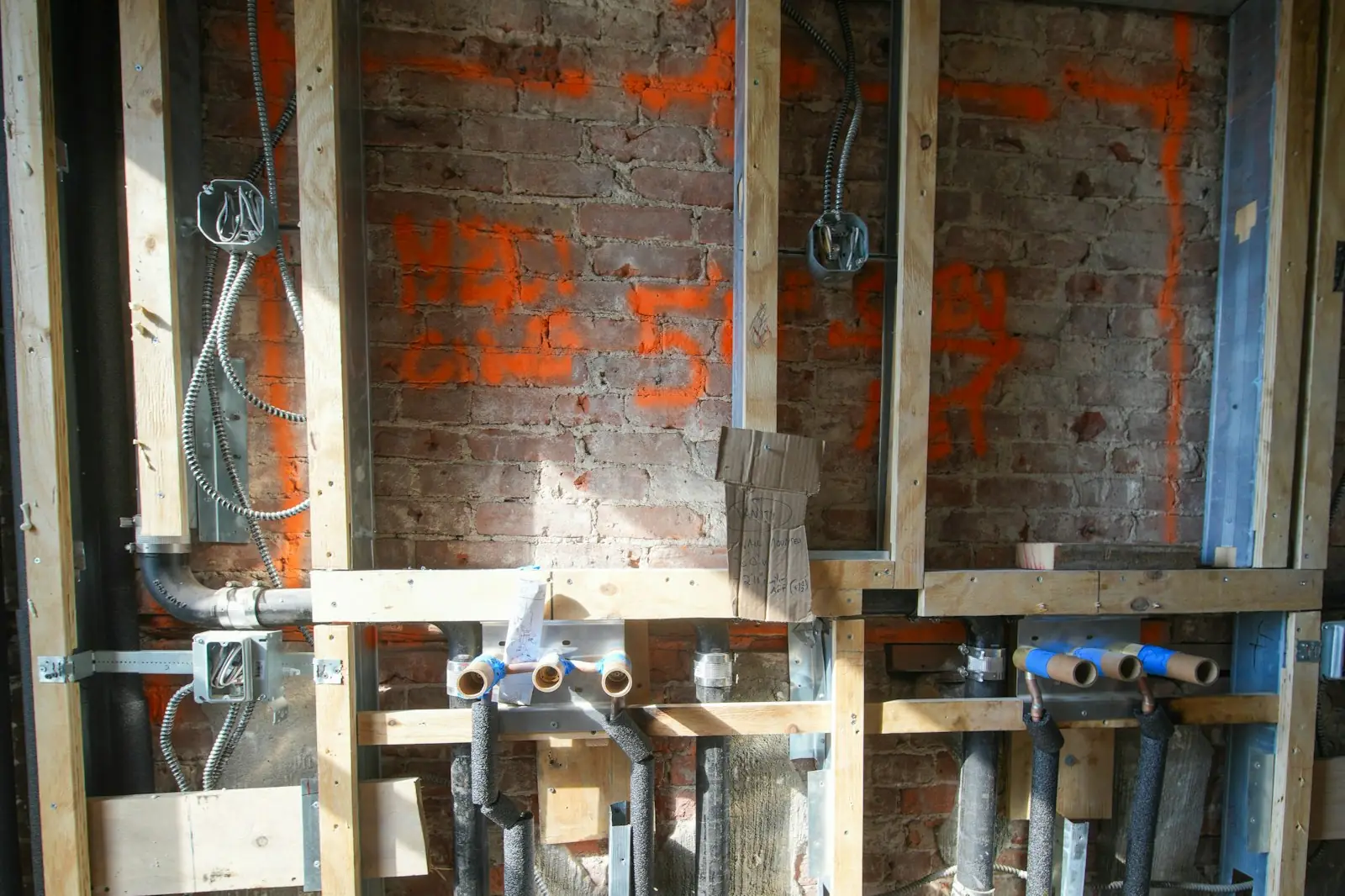
Most of the burst pipes we see in Mott Haven aren’t a mystery. They’re 80- and 100-year-old pipes doing exactly what old pipes do. The good news: water from a burst supply line starts out clean, and if you move fast, a lot more can be saved than with a sewage backup.
Shut it off first: where the valves are
| Where the water is coming from | Where to shut it off | Who can do it |
|---|---|---|
| Under a sink, behind a toilet, a washer hose | The small valve under or behind the fixture (turn clockwise) | You |
| Inside a wall or ceiling, or from the apartment above | The riser valve for that line, or the building main | The super |
| Can’t tell, or nothing closes | The building main — usually in the cellar near the water meter | The super, or call us and we’ll talk you through finding it |
If water is running through a light fixture or near outlets, keep away from them and shut the breaker only if you can reach it from a dry spot.
Why pipes burst in Mott Haven buildings
- Galvanized steel risers. Common in pre-war tenements. They rust from the inside, get thin, and split — often at a threaded joint inside the wall.
- Old shutoffs and fittings. A valve that hasn’t been turned in years can snap or start leaking the day someone finally turns it.
- Freezing. Pipes in exterior walls, unheated hallways and stairwells, and sprinkler lines near windows. Frozen pipe bursts →
- Pressure and water hammer. Banging pipes when a valve slams shut stress old joints.
- Supply hoses and appliances. Washer hoses, dishwasher lines, fridge lines and water heaters — common in newer buildings along Bruckner Boulevard too.
- Work in the building. A repair on one floor can disturb an old line on another.
How far the water really went
In a stacked building, the visible puddle is the small part of the problem. Water from a split riser travels:
- Down the wall cavity, along the pipe chase, sometimes three or four floors
- Across the top of the ceiling below, then out through light fixtures and cracks
- Under hardwood and into the subfloor, where it cups the boards days later
- Into plaster, which holds water much longer than drywall
That’s why we start with a thermal camera and moisture meters on every affected floor — above, at, and below the break — and map it before we dry anything.
The leak is fixed and the floor looks dry. Do I still need drying?
Usually, yes. The surface dries fast; the inside of the wall, the subfloor and the plaster don’t. Left wet, they can start growing mold within 24–48 hours, and hardwood keeps cupping for days. A moisture reading tells you in seconds whether it’s actually dry.
How we handle a burst pipe job
- Confirm the water is offWe work with the super on the riser or main if needed.
- Map every affected unitThermal imaging and moisture meters above and below the break, with a written moisture map.
- Extract fastStanding water, wet carpet and pad, water sitting on top of ceilings. Speed here saves the most money.
- Open only what has to be openedSmall, targeted openings to get air into wall cavities and ceilings — not tearing out whole rooms.
- Dry the structureAir movers and dehumidifiers set for the materials. Plaster and old hardwood are dried slowly so they don’t crack or split.
- Readings until it’s dryEvery visit, written down, for every unit — that’s what your adjuster needs.
Who pays for burst pipe damage
- Renters: the landlord is responsible for the pipe and for making your apartment livable again. Your belongings are usually covered by your renters insurance — and if a neighbor’s negligence caused it, you may be able to recover from them. Renter rights →
- Owners and co-op or condo boards: sudden, accidental pipe bursts are commonly covered by property policies; slow, long-term leaks often aren’t. Our moisture readings and photos help show what happened and when. For building owners →
What burst pipe cleanup costs
Most burst-pipe jobs are Category 1 (clean water) if they’re caught quickly: typically $650 – $1,800 for one room or a small apartment area. Multi-unit riser failures cost more because every affected apartment is extracted and dried. Water that sat for a day or two can become Category 2 — $1,200 – $4,000. You get a written estimate before work starts. Cost guide →
Burst pipe FAQs
What should I do first when a pipe bursts?
Shut off the water — at the fixture valve if you can, or get the super to close the riser or the building main. Stay away from wet electrical. Take photos, move your things out of the way, and call us.
Is water from a burst pipe dangerous?
Water from a supply pipe starts clean (Category 1). The danger is electrical, ceilings that hold water and can sag, and the water turning dirty if it sits on old floors for a day or two.
Do you dry the apartments below the leak too?
Yes. In stacked buildings we check and dry every unit the water reached, above and below the break, and document each one separately.
Will you fix the pipe?
Pipe repair is a licensed plumber’s job. We extract the water, dry the building and document it; the building’s plumber or the super handles the pipe itself.
How long does drying take after a burst pipe?
Often a few days for drywall and tile; plaster walls and hardwood floors can take a week or more. We finish when the moisture readings show the materials are dry.