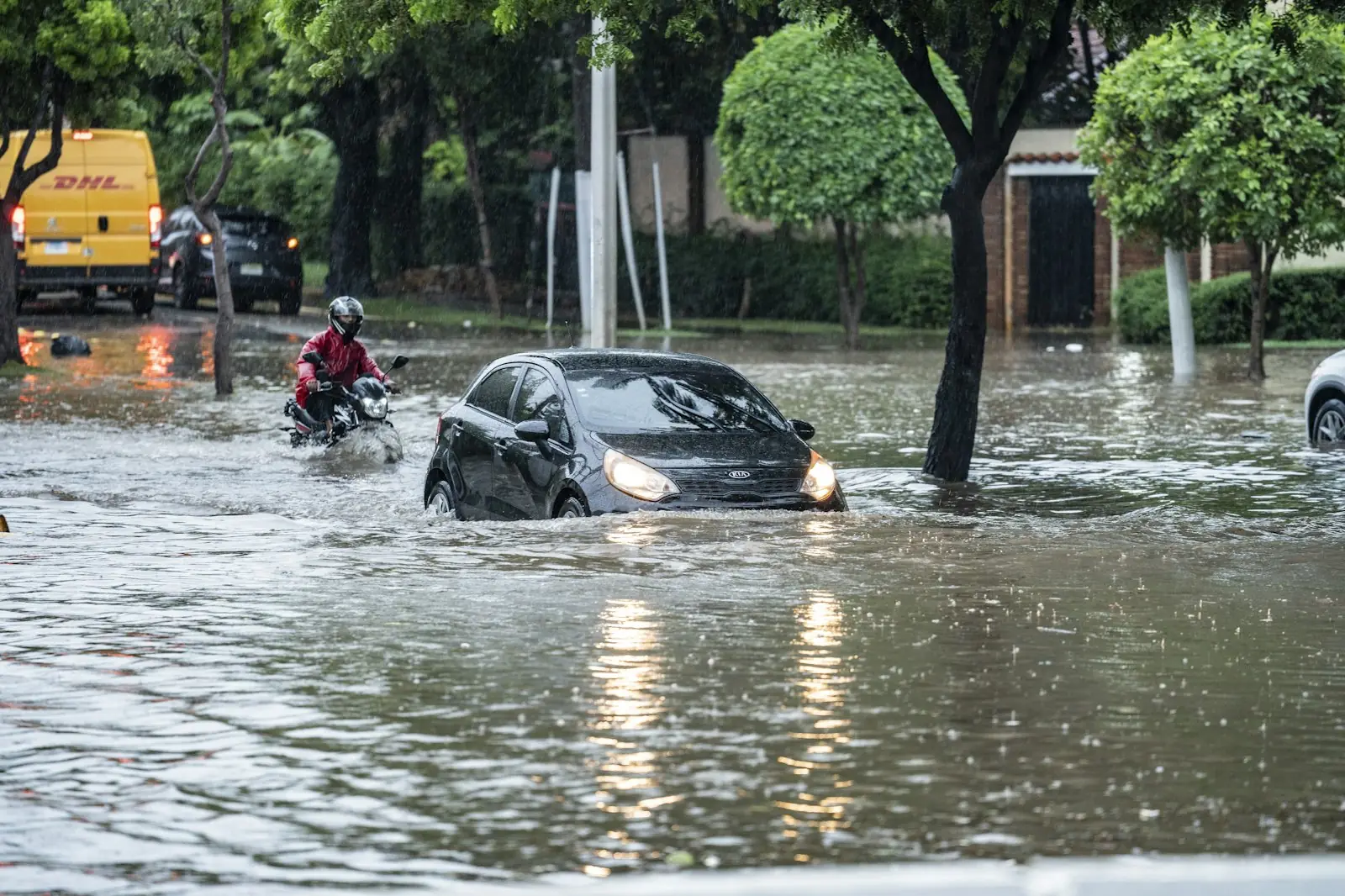
Most people in Mott Haven don’t think about the sewer until it comes up through the floor. But almost every basement sewage call we get follows the same physics — and once you understand it, you’ll know what to report, who’s responsible, and which fixes are worth the money.
How the combined sewer works
Like most of the older parts of New York City, Mott Haven is served by a combined sewer: one set of pipes carries both rainwater from the street and wastewater from every toilet, sink and shower in the buildings. On a dry day that’s fine. In a heavy storm, the volume of rain can fill those pipes faster than they can drain.
When the main in the street fills up, the water has to go somewhere. It pushes back up the connections to the buildings and out of the lowest openings it can reach — cellar floor drains, basement toilets, laundry sinks and tubs in ground-floor apartments. That’s why the water that comes up during a storm is sewage, and why it’s treated as Category 3. What Category 3 means →
The short version: rain + sewage share one pipe → the pipe fills in a storm → the overflow comes out of the lowest drain in your building.
The four ways water gets into NYC basements
DEP describes several kinds of flooding in the city. In Mott Haven, you can get all of them:
Sewer backups
Wastewater and stormwater that can’t flow into the sewer reverse direction and come into buildings, usually through basement plumbing fixtures.
Street flooding
Leaves and trash on catch basin grates block drainage, so rain floods the street — and runs down cellar stairs and through sidewalk doors.
Coastal flooding
In coastal areas, high tide plus storm surge can send water back into the sewer system and out through manholes, catch basins and basement connections. Mott Haven sits on the Harlem River and the Bronx Kill.
Groundwater
After long rains, water in the ground seeps through old brick and stone foundation walls — common in rowhouse and tenement cellars.
Why Mott Haven gets hit harder
- Low ground by the water. The neighborhood runs down to the Harlem River on the west and the Bronx Kill on the south, and blocks near the waterfront and along the Bruckner corridor sit low. Low blocks are where the water goes.
- Old buildings, old connections. Many buildings date to the late 1800s and early 1900s, with cellars below the street and sewer service lines nobody has looked at in decades.
- Converted basements. DEP warns that bathroom fixtures in basements shouldn’t sit lower than the sewer connection, because that setup lets raw sewage back up into basement apartments through the drains.
- Lots of pavement. Dense blocks, highways and rail yards mean rain runs off fast instead of soaking in, so it hits the sewer all at once.
It’s not always the rain: blocked lines
If sewage comes up when it isn’t raining, the cause is usually a blockage. DEP has said the most common cause of sewer backups in New York City is blocked pipes from grease and debris that shouldn’t have gone down the drain. A blockage can be in the building’s own stack or service line, or in the City sewer in the street.
How do I tell a storm backup from a blocked line?
- Storm backup: happens during or right after heavy rain, often hits several buildings on the block, and clears up when the rain stops.
- Blocked line: happens in dry weather, gets worse when people upstairs use water, and keeps coming back until the line is cleared.
Whose pipe is it? City main vs. your service line
| Part of the system | Who’s responsible |
|---|---|
| The sewer main in the street | NYC DEP |
| The sewer service line from the building to the main | The property owner |
| Stacks, drains and pipes inside the building | The property owner (your landlord, if you rent) |
How to report a sewer backup — and protect a claim
- Call 311 or use the 311 websiteProperty owners can report a sewer backup or sewage flooding during and after a weather event, even after the water is gone. DEP says it inspects within six hours of the complaint; heavy rain can delay that.
- Let DEP check the sewerIf DEP confirms a backup in the City sewer, it starts the repair process; if it can’t pin down the cause, it may flush the system.
- Watch for a Notice to RepairIf DEP finds the problem in the building’s private sewer service line, the owner is issued a Notice to Repair.
- File with the Comptroller if the City is at faultIf you believe the City caused your damage, you have 90 days to file a claim with the NYC Comptroller’s Office. If it happened during heavy rain, you don’t need a DEP complaint number.
- Document everythingPhotos, water depth, the drain it came from, damaged items, and the cleanup company’s report.
What actually cuts the risk
Drain and toilet plugs
Under Local Law 1 of 2023, DEP evaluated ways to prevent basement sewer backups. Its report found that simple toilet and drain plugs are easy and inexpensive to install, need no maintenance, and don’t risk causing a backup inside the building.
Backwater valves
A backwater (or check) valve closes when sewer water rises toward your basement plumbing. DEP’s report found they can be effective but are problematic in many situations: they need annual maintenance, and in multi-family buildings everyone has to coordinate — because when the valve is closed, wastewater from the building itself has nowhere to go. A licensed plumber should look at your setup before you install one.
Everyday habits
- Keep grease, wipes and debris out of the drains.
- Report clogged catch basins to 311 before storms.
- Store things on shelves or in sealed bins — not cardboard on the cellar floor.
- Know where the building’s main shutoff and cleanouts are.
The bigger picture
Sewer backups have been climbing as storms get heavier. City Limits reported that DEP received 16,521 sewer backup complaints in the fiscal year ending in July 2022, up more than 40 percent from the year before. In 2026 the City announced a $108 million effort to replace more than 6,000 catch basins, starting in Queens and then moving to Brooklyn, the Bronx and Staten Island. Upgrades help over time — but a single storm can still overwhelm an old sewer tonight.
Sewage in your cellar right now?
Keep everyone out, stop using water in the building, report it to 311, and call us at (555) 010-1234. How we clean up sewage backups →
Sewer backup FAQs
Why does my basement flood with sewage when it rains?
Because most of Mott Haven is on a combined sewer that carries both rainwater and wastewater. In heavy rain the sewer fills up and pushes water back out of the lowest drains connected to it — usually basement floor drains, toilets and sinks.
Is the City responsible for sewage in my basement?
DEP is responsible for the sewer main in the street; the owner is responsible for the building’s service line and pipes. If you believe the City’s sewer caused your damage, you have 90 days to file a claim with the NYC Comptroller.
How fast does DEP respond to a sewer backup complaint?
DEP says it inspects within six hours of a 311 sewer backup complaint, though heavy rainfall or large snowmelts can cause delays.
Do backwater valves work in NYC?
They can, but DEP found they need annual maintenance and building-wide coordination, which is hard in multi-family buildings. Toilet and drain plugs are a cheaper, maintenance-free alternative.
Why does sewage back up when it isn’t raining?
Usually a blockage — often grease and debris — in the building’s stack or service line, or in the City sewer. If it keeps happening in dry weather, have the line inspected and report it to 311.